
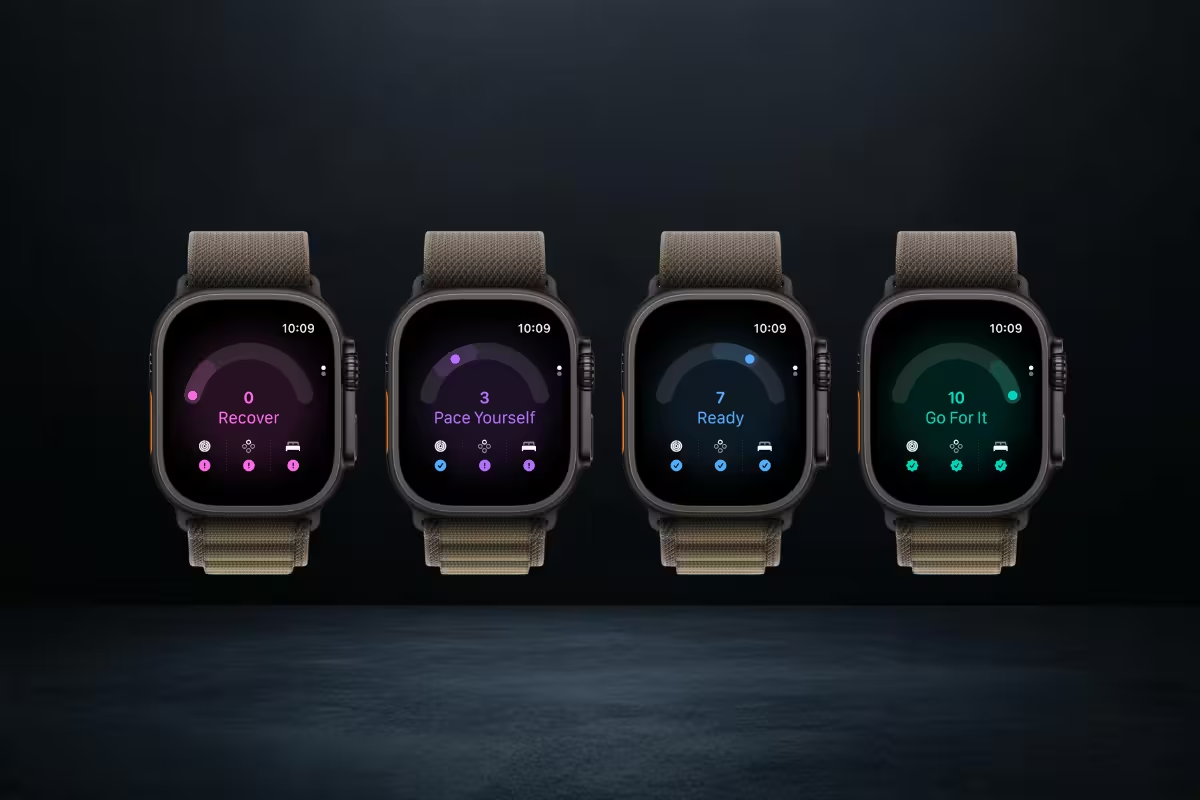
Apple Watch Series 12 and Ultra 4 add 24x more frequent HRV tracking, a daily readiness score, and a $119 Quest-powered blood panel — Apple's biggest swing yet at the recovery-wearable category Whoop and Oura built.
Apple just closed the gap on recovery tracking — and did it with hardware, not just software.
The new Health Sensing System in Apple Watch Series 12 and Ultra 4 measures heart rate every 5 seconds and HRV every 5 minutes, a 24x jump in frequency over the previous generation. That data feeds a new readiness score: a single 0-10 number, refreshed throughout the day, that tells users to Recover, Pace Yourself, Ready, or Go For It — the same "should I train today" question Whoop and Oura have built their entire product around.
The redesigned Health app pushes further into longevity territory. A new Insights tab summarizes heart, sleep, readiness, and cycle data daily, while a Longevity tab introduces Health Age — a biological-age score built from VO2 max, resting heart rate, sleep, and HRV, with the option to layer in lab results like A1c and LDL. Apple partnered with Quest Diagnostics to make that easy: users can order a 50-biomarker panel for $119 at roughly 2,000 U.S. locations, directly through the app.
The app also adds on-device movement evaluations — flexibility, strength, balance, and VO2 max assessments run entirely through the iPhone camera, with no video stored or shared — and expands Cycle Tracking with dedicated perimenopause and menopause support, including symptom logging and deviation alerts for users 40 and up.
None of these features are new to the category. Whoop and Oura have offered readiness scores, HRV trends, and biomarker integrations for years. What's new is who's shipping them: Apple Watch has roughly 100 million wearers, dwarfing Whoop's 3 million and Oura's 5 million (the latter now headed toward an IPO). Apple didn't out-innovate the recovery-wearable category — it out-scaled it.

.png)


.png)

_converted.avif)