
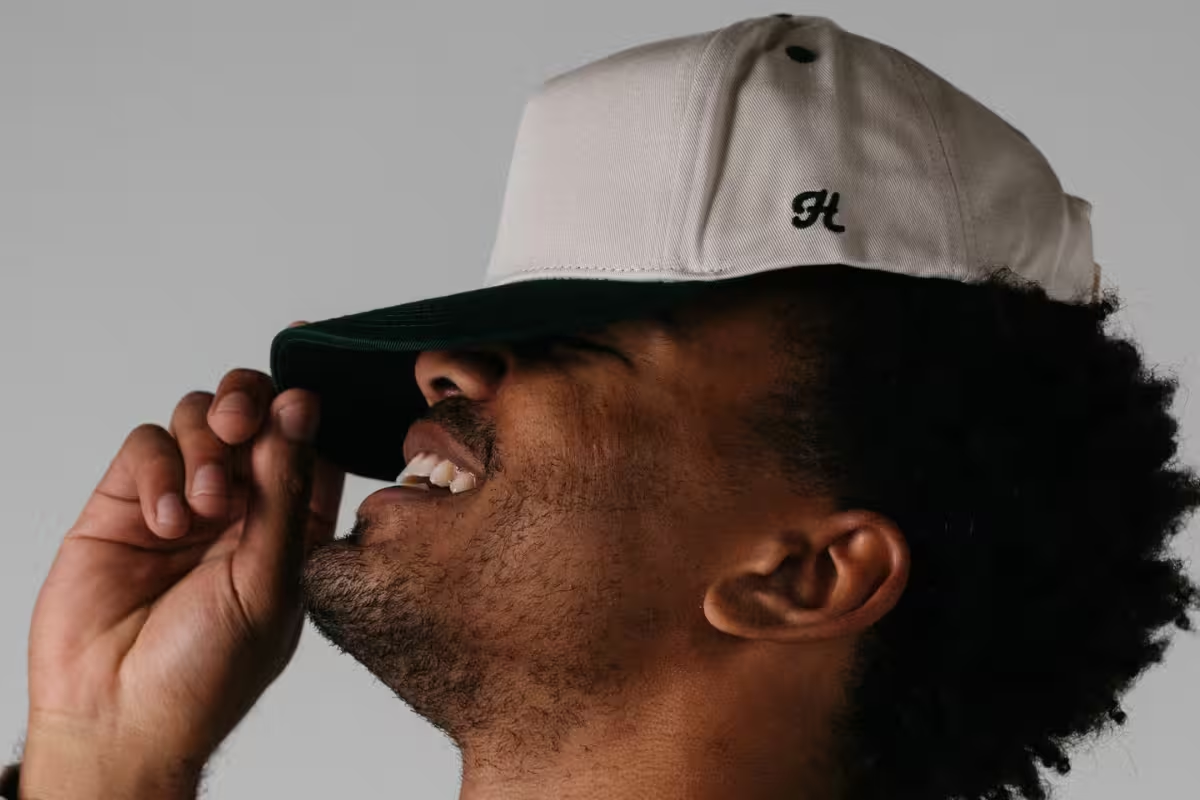
It's the same hat silhouette you already wear, rebuilt from the inside out with clinical-grade silk instead of cotton. Your hair, your scalp, your skin shouldn't pay the price for a great-looking hat.
Hatsy has launched its debut collection of silk-lined hats, co-founded by Dr. Robert Dorfman, a Beverly Hills hair restoration and aesthetic surgeon. The hats look like the trucker and dad hats you already own. What's different is everything you can't see: a fully silk-lined interior built to stop the damage a standard hat causes over years of daily wear.
It comes at a moment when the science on hat-related hair and skin damage is finally catching up to what dermatologists have quietly known for years.
For decades, hat construction hasn't changed. Cotton or synthetic lining, a sweatband against the hairline, worn for hours at a time. And for most people, that's felt harmless. It isn't.
Dorfman has treated this exact pattern across more than 20,000 patients in his clinic: traction alopecia, acne mechanica, hairline recession that builds slowly, year after year, from the same source, whatever's touching the scalp all day.
Cotton and synthetic linings create three problems at once. They trap heat against the scalp. They absorb moisture instead of letting it move away from the skin. And they generate friction against the hairline with every hour of wear.
Individually, none of that feels significant in the moment. Compounded daily over months and years, it's the mechanical stress Dorfman says sends people into a hair restoration clinic in the first place.
Not all fabric interacts with hair and skin the same way. Silk's surface is smooth enough to produce near-zero friction against the hair shaft. It's naturally thermoregulating, so it doesn't trap heat the way synthetic linings do. And it doesn't absorb moisture the way cotton does, letting sweat move away from the scalp instead of sitting against it.
Dorfman set one non-negotiable condition before signing on: the silk grade couldn't be a marketing shortcut. Hatsy uses Grade 6A Mulberry silk exclusively, the same standard he evaluates for anything that contacts a patient's scalp or hairline.
This is the problem Hatsy was built to solve.
A quick rundown of the construction:
It's not a different hat. It's the same hat, minus the tradeoff.
Daily hat-wearers have quietly accepted hairline damage as the cost of the habit. Hatsy's bet is that it never had to be. The collection, including trucker and dad hat styles, is now available direct to consumer at hatsy.com, starting at $70.

.png)


.png)

_converted.avif)