
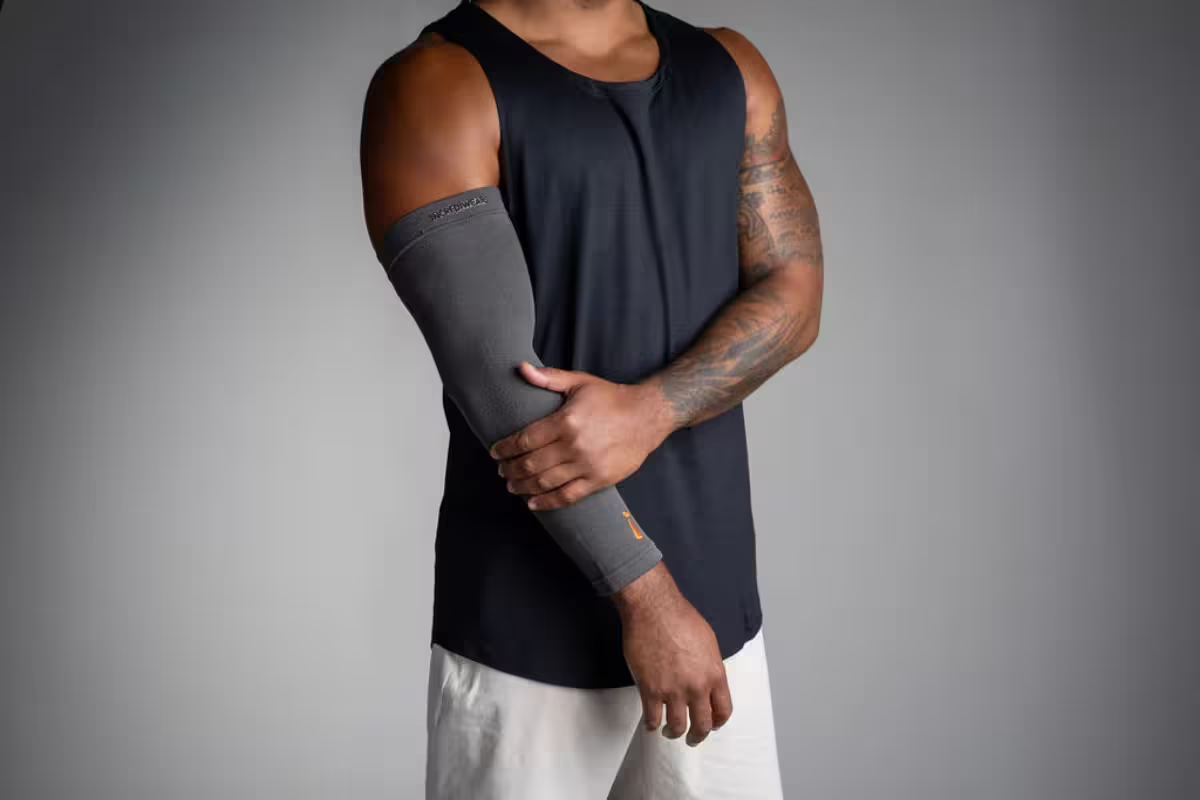
Novak Djokovic invests in Incrediwear, the recovery wearable brand he wore through his 2024 comeback.
Novak Djokovic has built one of sport's most studied longevity cases — plant-based diet, red light therapy, yoga, obsessive sleep discipline. Now he's adding a wearable recovery brand to that portfolio, and this time he's not just wearing it. He's invested in it.
Djokovic has launched a co-branded line of therapeutic wearables with Incrediwear, debuting at the BNP Paribas Open. The collection includes an arm sleeve, knee sleeve, and leg sleeves — each built with semiconductor particles and infrared-emitting fabric that the company positions as a new class of performance technology. The launch was marked by a meet-and-greet at the tournament and an aerial banner overhead. For a brand that has operated largely under the radar since its 2009 founding, the moment represented a significant step into mainstream visibility.
Incrediwear doesn't work like a standard compression sleeve. There's no compression at all. Instead, the garments are made from germanium and charcoal-infused fabric that is activated by body heat to emit infrared and negative ion therapy — promoting blood flow, oxygen delivery, and what the company describes as accelerated natural healing. The claim is that you get the recovery benefits without the circulatory restriction that compression creates. Incrediwear describes the garments as wearable 24/7 and positions them as both an alternative to and supplement for traditional compression. It's worth noting the clinical evidence behind the specific mechanism remains inconclusive, though the brand describes its results as clinically proven.
The backstory here matters. After tearing his meniscus at the 2024 Roland Garros and undergoing surgery, Djokovic returned to competition faster than almost anyone anticipated — reaching the Wimbledon final and then winning Olympic gold in Paris, all while wearing a distinctive Incrediwear sleeve on his right knee. That visible, high-stakes recovery arc became the brand's most compelling real-world case study. Djokovic formalized his relationship with Incrediwear in August 2025, acquiring a significant stake in the company alongside his global ambassador role.
Most athlete brand deals are transactional. Djokovic is making a different kind of argument. "I try to be a testament, or an example, of the products or the businesses or brands that I'm part of," he told press this week. At 38, still competing at the top of professional tennis, his body is the evidence. That authenticity framing — athlete as living proof point rather than paid spokesperson — is increasingly how the most credible performance brands are being built. Jackson Corley, Incrediwear's founder and CEO, made the positioning explicit: "When one of the world's greatest athletes reaches out because our product made a difference, that's the power of real results."
Recovery wearables are a crowded space, but most of the market is built around data tracking — smartwatches, rings, patches that monitor rather than treat. Incrediwear sits in a different category: therapeutic wearables designed to actively support healing rather than just measure it. Djokovic's investment signals confidence that this subcategory has room to scale, particularly as elite athletes increasingly treat recovery as a 24/7 discipline rather than a post-training window.
The most influential athlete endorsements in performance health right now aren't about aesthetics or aspiration — they're about proof. Djokovic wore Incrediwear through one of the most scrutinized injury recoveries in recent tennis history, won an Olympic gold medal on the other side of it, and then bought into the company. That sequence is a stronger brand story than any campaign could manufacture. Whether the science fully catches up to the claims is an open question — but in the performance recovery space, athlete results have always moved faster than peer review.

.png)


.png)

_converted.avif)